
Workshop recording: Has the NDIA taken self-management away? | NDIS | News | self-management
| NDIS Fund Management | Events | News | Keep your records | Know your rights
| Video | Event
| NDIS | News | self-management
| NDIS Fund Management | Events | News | Keep your records | Know your rights
| Video | Event

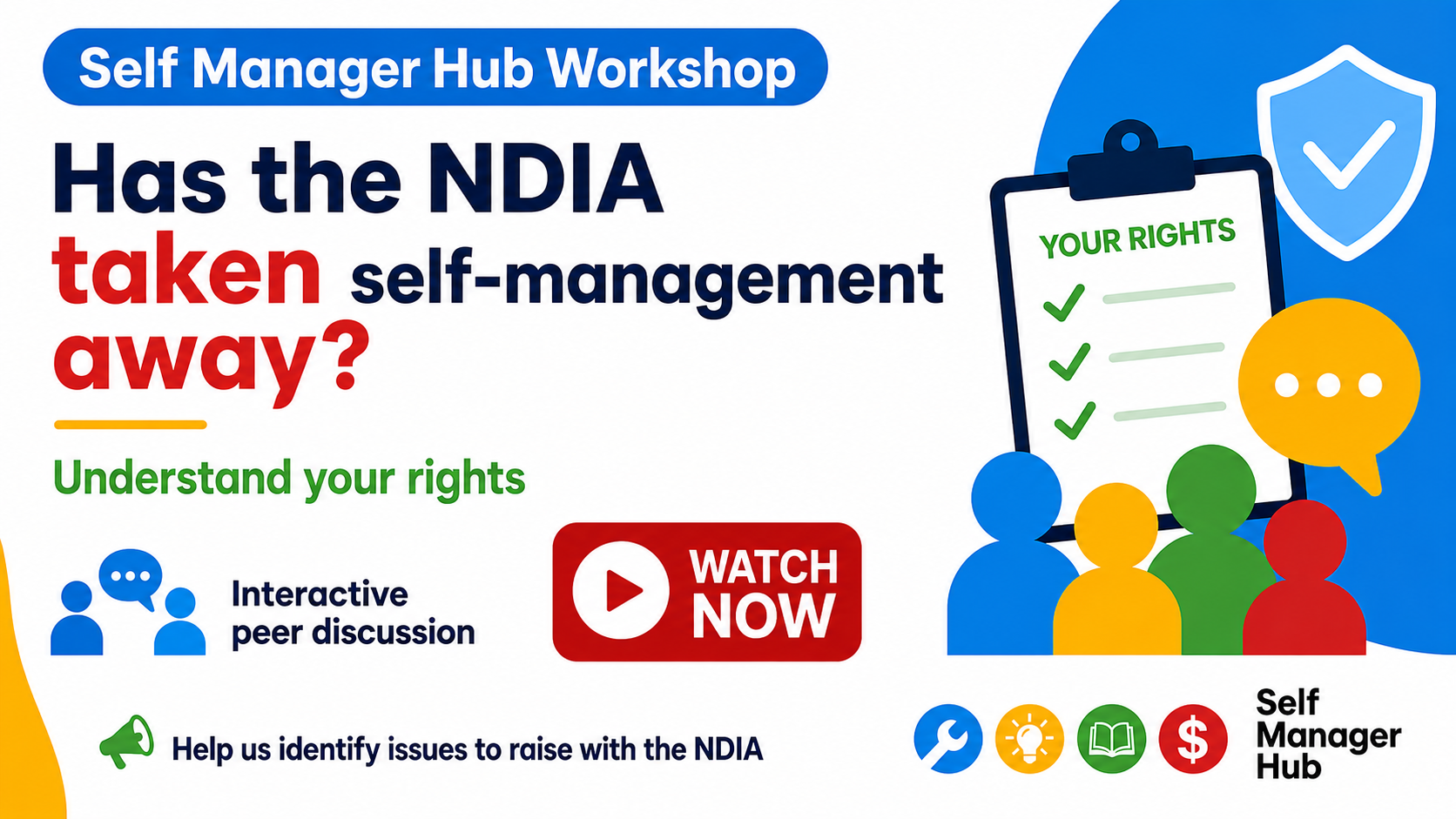
Self-management is one of the most important ways people with disability and our families make the NDIS work in real life.
It helps us:
- choose trusted workers and providers
- use flexible supports that fit our lives
- directly employ or contract staff
- negotiate value for money
- build confidence, independence and control
But some people are being told they can no longer self-manage their NDIS funding, sometimes without clear reasons, evidence, or a proper explanation of their rights. That is why Self Manager Hub recorded this workshop and turned it into a practical video resource.
In this peer-led session, Dr George Taleporos and Erica Smith explain when the NDIA can refuse, restrict, or remove self-management, what “unreasonable risk” means, and what people can do to work towards getting self-management back.
The video covers:
- why self-management can be removed or refused
- what reasons and evidence the NDIA should provide
- what should not be used against someone on its own
- the difference between genuine mistakes, misuse and fraud
- what to ask for if self-management has been taken away
- what evidence can help show risks have been addressed
- pathways to return to self-management, including plan variation, reassessment and review
- practical safeguards people can propose
This is a must-watch resource for anyone who has had self-management taken away, is worried it could happen to them, or wants to better understand their rights and responsibilities.
Self-management should be supported wherever risks can be managed. Choice and control should be protected through clear information, practical safeguards and respectful support, not removed without clear reasons.
Resources:
Watch the video resource and share it with anyone who may need it.
Important note
This workshop provides general information and peer support. It is not legal advice.